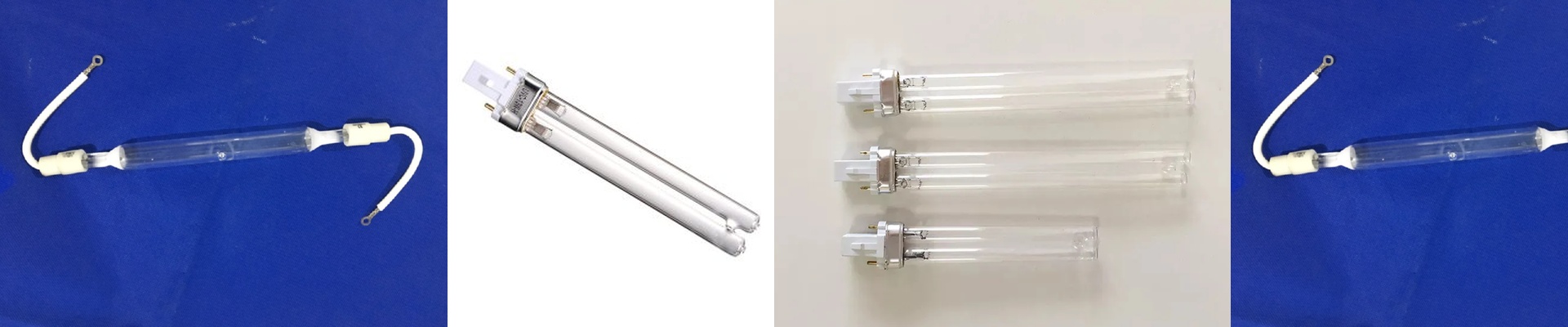
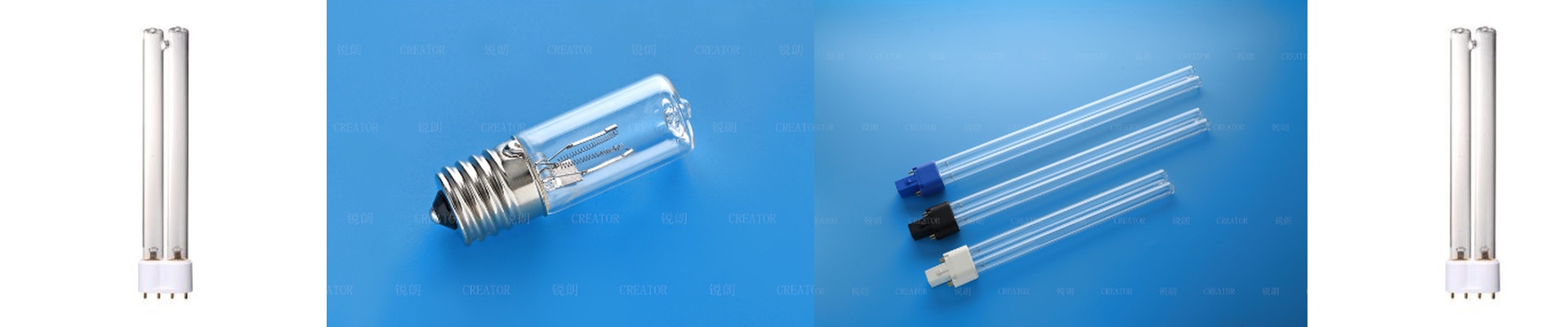
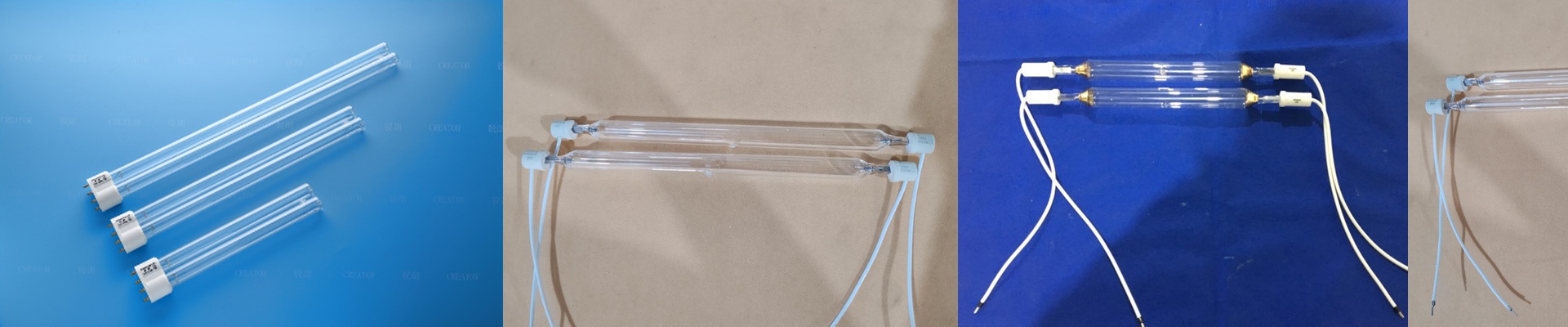
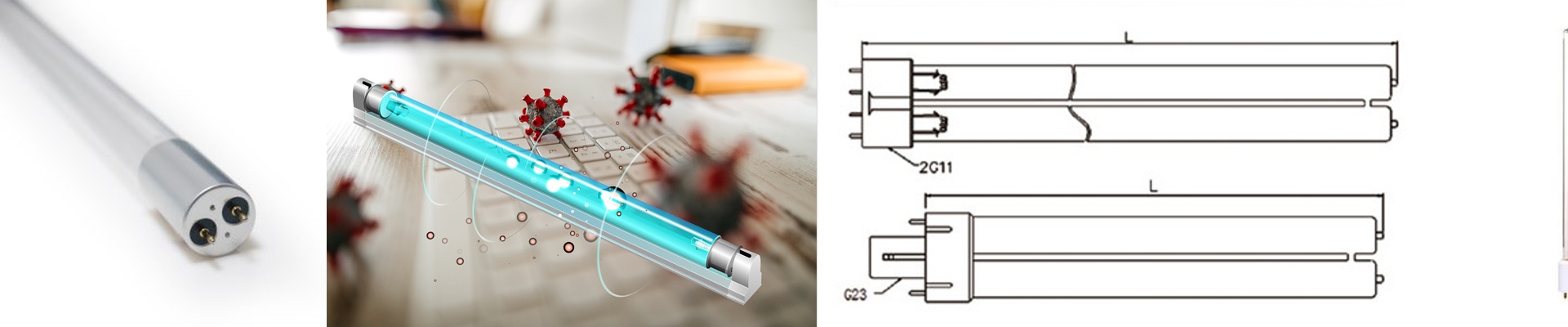
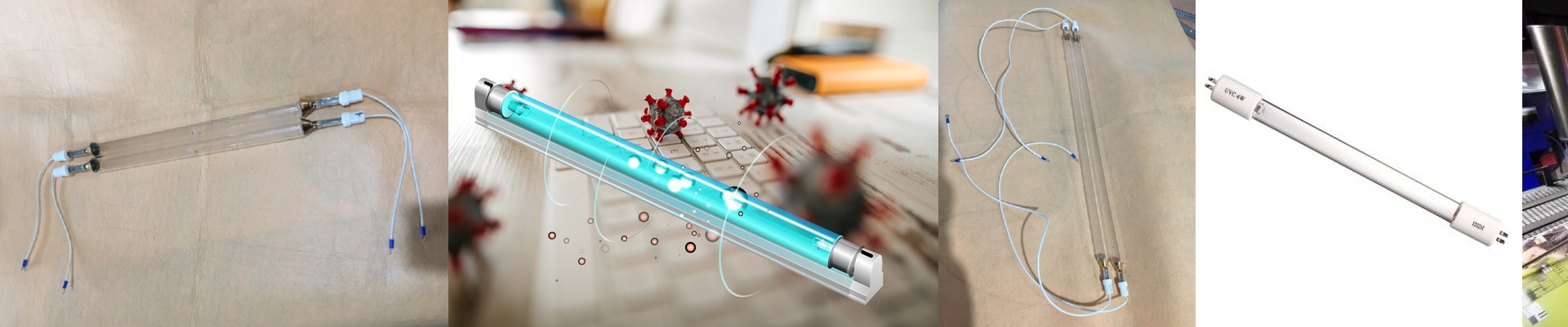
On the press floor, profitability hinges on one thing: ink that cures the instant it hits the substrate. When the lamp underperforms, you don’t just lose time—you lose yield. You start seeing tack, adhesion failure, rejects that should never have left the line. And the root cause is rarely as simple as “the lamp is dead.” More often, it’s spectral mismatch, dropping irradiance, and a reflector that isn’t delivering the energy density it was designed to at the cure plane. A mercury vapor lamp isn’t just a heat source. It’s a photochemical driver. UV ink cures because photoinitiators inside the ink absorb specific wavelengths, then generate free radicals that force monomers and oligomers to cross-link. If the output at the key wavelengths is too low, the reaction stalls. If the output profile drifts, you can get a surface that looks cured while the bulk stays undercured.
What actually matters
When we build replacement mercury lamps for printers, we design around three measurable outcomes: stable spectral output, high peak irradiance at the arc position, and repeatable energy density delivery at the substrate. **Spectral output and wavelength match.**Mercury lamps for UV curing deliver strong output lines, with most standard UV ink systems relying heavily on the region around 365 nm. Some formulations are tuned to 385 nm or 405 nm to ease surface cure and reduce oxygen inhibition. The lamp has to deliver the photon flux the ink’s absorption peaks expect. When the spectrum is off—too much visible, too little UV—you get slow cure, poor adhesion, and cure that varies across the sheet. **Peak irradiance and energy density.**Peak irradiance (mW/cm²) sets how fast the reaction starts. Energy density (mJ/cm²) determines whether cross-linking finishes through the full ink film. In real life, you need enough irradiance to overcome surface inhibition from oxygen, and enough total energy to drive bulk cure without cooking the substrate. When lamp output decays, the only way to compensate is to slow the press. That isn’t a “speed setting.” That’s a cure deficit. **Lamp life and output stability.**Mercury lamp output drops with operating hours. We aim for a stable curve by controlling electrode erosion and keeping arc positioning consistent, so irradiance behaves predictably from one lamp change to the next. We’ve seen units run 5,000+ hours with less than 5% output drop when operated within rated parameters. That means a steady cure window and fewer tweaks at startup. **Reflector efficiency and dichroic control.**The reflector is part of the optical system, not an accessory. A well-made reflector concentrates UV into the cure zone and cuts losses. Dichroic coatings can be chosen to reflect the key UV wavelengths while letting unwanted infrared pass, which reduces substrate heating. When the reflector coating degrades, the lamp can feel “hot” while delivering less usable UV. **Electrical and mechanical fit.**Replacement lamps have to match the printer’s ignition and operating behavior—voltage, arc length, end cap type, connector. Mismatched ignition leads to repeated strikes, an unstable arc, and premature failure. Physical misalignment changes the irradiance profile, and that can create hot spots or weak zones across the print. **Ozone management.**Some mercury lamps generate ozone, which can be a safety and material compatibility issue. Ozone-free configurations use quartz envelopes and coatings that block the short-wave UV responsible for ozone formation. This matters most in tight print units and plants where ventilation is limited.
Why this works in practice
UV curing in printing is a chain reaction that starts the moment ink meets UV light. The lamp’s output profile has to line up with the photoinitiator chemistry, and the optical system has to deliver the required energy density at the substrate. When the lamp and reflector do their job, you get:
- Faster cycle timebecause the ink cures fully at press speed, without slowing down to make up for weak output.
- Consistent qualitybecause spectral output and irradiance stay stable through the run. No tail-end tack, no color shift from undercured layers.
- Lower operating costbecause stable output reduces scrap, and predictable lamp life cuts downtime for replacements.
- Less wasted heatwhen the reflector and coating strategy keeps infrared off the substrate. That means fewer heat-related distortions and fewer jams. In screen printing, thick ink films need high peak irradiance to penetrate the top layer without skinning. In flexo and offset, thin films need precise energy density to avoid over-curing, which can cause adhesion issues downstream. The same lamp platform can be configured differently—wavelength, arc length, reflector geometry—to match the ink film, the press architecture, and the cure profile you need.
What you need to watch
A replacement mercury lamp only performs when the whole curing system is aligned.
- **Match the ignition method.**If your printer is set up for a medium-pressure mercury lamp with a specific ballast profile, don’t substitute a different electrical design. Repeated ignition stresses electrodes and shortens lamp life.
- **Clean the reflector every lamp change.**Oil, ink residue, and dust on the reflector rob you of usable UV. A dirty reflector can cut effective irradiance more than a slightly aged lamp.
- **Confirm arc length and alignment.**Even a few millimeters of misalignment changes irradiance distribution and can cause uneven cure across the print width.
- **Monitor output—don’t guess.**Use a spectral radiometer to track irradiance and energy density at the substrate plane. If you don’t measure, you won’t know when the lamp is drifting.
- **Keep cooling and ventilation in check.**Adequate airflow keeps lamp and reflector temperatures in range. Overheating accelerates output decay and can damage end caps and connections.
- **Respect the warm-up curve.**Mercury lamps stabilize over a short warm-up period. Set press speed after the lamp reaches stable output, not before. If you run multiple presses with different ink systems, standardize on a replacement lamp family that can be configured for 365 nm, 385 nm, or 405 nm as needed—while keeping the same mounting footprint. That reduces spare parts headaches and keeps cure performance repeatable across lines. When the lamp matches the ink, the optics are clean, and the system is aligned, cross-linking happens immediately—on the first sheet, on the last sheet, at full press speed. That’s how you keep the press running and the rejects out of the bin.